The Credit Card Reading Answers
The Credit Card Reading Answers is an academic reading answers topic. The Credit Card Reading Answers has a total of 14 IELTS questions such as.
- Choose the correct letter.
- Write no more than one word for each.
- Do the following statements agree with the views of the author of the Reading Passage? Write yes, no, and not given.
The IELTS Reading section is an essential part of the test that evaluates a candidate's comprehension and analysis of various passage types. You will work through several IELTS reading practice problems in this section that resemble actual test situations. These questions are designed to help you improve your ability to recognise essential concepts, extract particular facts, and make inferences. Practising these IELTS reading problems can help you get comfortable with the structure and increase your confidence for the exam, regardless of whether you are studying for the Academic or General Training module.
Check: Get 10 Free Sample Papers
Check: Register for IELTS Coaching - Join for Free Trial Class Now
Section 1
THE CREDIT CARD
A short history
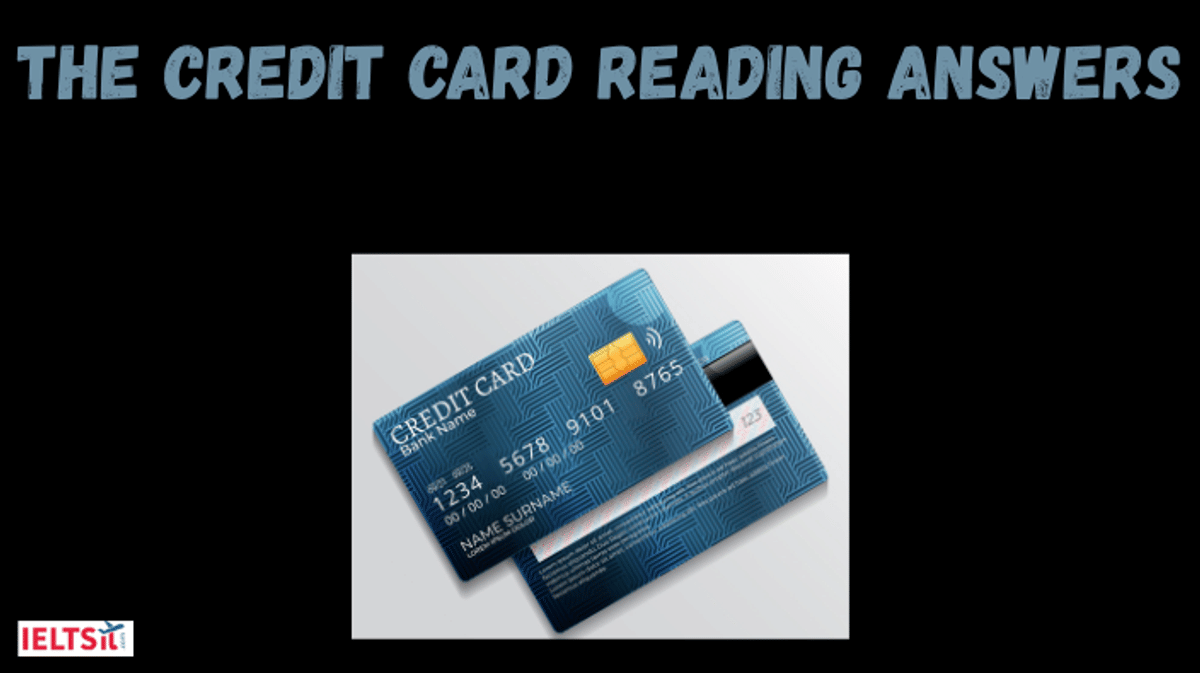
A credit card is a plastic card issued to users to enable them to purchase goods and services without using cash. These days, credit cards come in various types. It's up to the holder which one to choose. With a standard credit card, the holder needs to make monthly payments on the amount of money spent. If the full amount is not paid every month, interest accumulates on the balance. A charge card works in a similar way, except that the full amount must be repaid each month. Then there is a debit card, which is not a loan, as the card is linked to funds that are already in the cardholder's bank account, and they are spending money they already have. A pre-paid debit card is similar to a debit card, except that the funds have already been removed from the cardholder's savings account and put onto the card.
Credit cards emerged in 1950 when New York businessman Frank McNamara forgot his wallet while eating out in New York. To avoid such embarrassing occasions in the future. He created the Diners Club Card, a cardboard charge card that was accepted at two hotels and 28 restaurants. The club quickly grew to 10,000 members in its first year. After a few years, Diners Club began issuing credit cards as well, which could carry a balance and therefore did not have to be repaid in full every month and had an interest rate of 7 per cent. By 1953, it had become internationally accepted.
In 1958, other major companies came on board. These included Bank of America. American Express and Carte Blanche, owned by Hilton Hotels. Bank of America was the most innovative, as not only was it the original plastic card, but it was accepted by different types of merchants, not just hotels or restaurants. Bank of America introduced the card with a publicity stunt by sending thousands of credit cards to people who banked at their branches in Fresno, California. This is known in the industry as the 'Fresno Drop', and it turned out to be a very expensive move as it resulted in massive fraud and lack of payments that cost the bank millions. But despite this, the bank offered the same card to all its California customers the following year. By 1961 it had started making a profit and moved into other states in 1966. This meant out-of-state banks could issue cards that would be accepted by merchants all over the USA. Bank of America's credit card was the first credit card available, which was attractive to middle-class consumers and owners of small and medium-sized businesses.
In 1966, a group of East Coast banks started the Interbank Card Association (ICA) and soon every American bank was offering credit card services. To ease pressure on the banks and coordinate the process between merchants and banks, two nationwide organizations evolved. They are now the middlemen, making sure the transactions are legitimate before they are passed and working with the banks to complete the transactions. The BankAmericard eventually
became Visa, which then broke away from Bank of America and now has dealings with multiple banks. The ICA increased its number of member banks and changed its name to MasterCharge, which later became MasterCard. Visa and MasterCard remain the dominant credit card services around the world today. Different varieties of credit cards began to emerge. In the mid-1980s, department stores introduced the first cards to give cash bonuses for purchases. Card issuers, which had previously simply relied on their brands for promotion, soon realized that offering air miles for flights, gifts, and bonuses on sign-up, low-interest, and no-interest periods were effective measures to attract new customers.
As the century came to an end. credit card use increased dramatically, with many customers soon foolishly spending more than they earned. Interest rates soared, and many users were suddenly unable to make monthly payments, leaving them with steep penalty fees and massive debts. Credit card fraud was also a problem, and still remains so today, exacerbated by online fraudsters. During the global financial crisis of 2008, the recession and unemployment that followed meant many people were relying on their credit cards to survive in difficult times. The Credit Card Holders' Bill of Rights was introduced in 2009 in the USA., and it gave additional consumer protections and banned card industry practices that were seen as unfair or abusive.
These days, consumers are increasingly shopping and making purchases online, which requires the use of a credit card. Around 72 per cent of Americans carry a credit card. People who have avoided their use for many years are now being forced to have credit cards to shop on the Internet. Some online merchants are beginning to accept debit cards for payment, but until this happens universally, more people are at risk of going into debt. Credit card debt is extremely high in industrialized countries such as the USA, the UK, and Australia. Non-industrialized countries, and countries with strict bankruptcy laws, such as Germany and Italy, however, tend to have relatively low credit card debt. However, as credit card use increases in countries that are growing economically, and Internet sales grow, the risk of increasing personal debt is high. Unless credit cards are introduced and used with some measure of caution, awareness and protective legislation, the same issues that industrialized countries have today will eventually take hold of the entire world as the credit card Industry continues to grow.
Questions 27-30
Choose the correct letter.
27. A card is technically only a credit card if
A. The full amount is paid every month.
B. The card is connected to a bank account.
C. The card can carry an unpaid balance.
D. No interest is payable.
Answer: C
Supporting statement: If the full amount is not paid every month, interest accumulates on the balance. A charge card works in a similar way, except that the full amount must be repaid each month.
Keywords: the balance, full amount must be repaid
Keyword Location: Para 1, Lines 4-5
Explanation: The ability to carry an unpaid balance is the feature that defines a standard credit card, distinguishing it from a charge card (where the full amount must be paid).
28. Which incident do credit cards owe their existence to?
A. A stolen wallet.
B. An embarrassed restaurant owner.
C. A club with restricted membership.
D. A businessman without cash.
Answer: D
Supporting statement: Credit cards emerged in 1950 when New York businessman Frank McNamara forgot his wallet while eating out in New York. To avoid such embarrassing occasions in the future. He created the Diners Club Card
Keywords: forgot his wallet, businessman
Keyword Location: Para 2, Line 1
Explanation: The invention of the Diners Club Card (the first card) was prompted by the founder being a businessman without cash (having forgotten his wallet).
29. Why was the 'Fresno Drop' a disaster at first?
A. It was expensive to deliver to so many houses.
B. It never made any money for the bank.
C. People used the cards without paying the bank
D. The bank was not sure who they had sent the cards to.
Answer: C
Supporting statement: it turned out to be a very expensive move as it resulted in massive fraud and lack of payments that cost the bank millions.
Keywords: expensive move, cost the bank
Keyword Location: Para 3, Lines 6-7
Explanation: The "Fresno Drop" was disastrous because the bank experienced a lack of payments (users not paying their bills) and fraud, leading to millions in losses.
30. What name does the Interbank Card Association now go by?
A. BankAmericard
B. Visa
C. MasterCharge
D. Mastercard
Answer: D
Supporting statement: The ICA increased its number of member banks and changed its name to MasterCharge, which later became MasterCard.
Keywords: ICA, MasterCharge
Keyword Location: Para 4, Lines 7-8
Explanation: According to the text, the Interbank Card Association (ICA) eventually changed its name to MasterCharge, which later became MasterCard.
Questions 31-34
Write NO MORE THAN ONE WORD for each.
When department stores introduced cards that gave cash back, credit card companies realized they could get more customers by similarly 31........... them special deals such as cash-back and air miles.
Answer: OFFERING
Supporting statement: Card issuers... soon realized that offering air miles for flights, gifts, and bonuses on sign-up, low-interest, and no-interest periods were effective measures to attract new customers.
Keywords: offering, bonuses, low-interest, no-interest
Keyword Location: Para 4, Lines 12-13
Explanation: The passage states that the card issuers realized that offering special deals was an effective way to attract customers.
Previously, they had just been doing normal advertising based on the strength of their brands to 32…………people to start using their cards.
Answer: ATTRACT
Supporting statement: Card issuers, which had previously simply relied on their brands for promotion, soon realized that offering air miles for flights... were effective measures to attract new customers.
Keywords: promotion, attract
Keyword Location: Para 4, Lines 11-13
Explanation: The deals were intended to attract new customers, a goal that advertising based on brand strength had previously attempted to achieve.
Nowadays, people seem to be unaware that if they do not pay off their cards quickly, they will be hit with high 33………. costs.
Answer: PENALTY
Supporting statement: Interest rates soared, and many users were suddenly unable to make monthly payments, leaving them with steep penalty fees and massive debts.
Keywords: rates soared, penalty fees
Keyword Location: Para 5, Lines 2-3
Explanation: The high costs resulting from being unable to make payments are referred to as steep penalty fees.
Credit cards can be a trap for consumers, particularly if they fall on hard times and 34........... by living off their credit cards.
Answer: SURVIVE
Supporting statement: During the global financial crisis of 2008, the recession and unemployment that followed meant many people were relying on their credit cards to survive in difficult times.
Keywords: 2008, survive
Keyword Location: Para 5, Lines 5-6
Explanation: The text mentions people relying on credit cards to survive during difficult economic periods.
Questions 35-40
Do the following statements agree with the views of the author of Reading Passage 3?
In boxes 35-40 on your answer sheet, write
YES if the statement agrees with the views of the author
NO - if the statement contradicts the views of the author
NOT GIVEN - if it is impossible to say what the author thinks about this
35. People should make sure they can afford the debt before they spend.
Answer: YES
Supporting statement: many customers soon foolishly spending more than they earned... Unless credit cards are introduced and used with some measure of caution, awareness and protective legislation
Keywords: measure of caution, protective legislation
Keyword Location: Para 6, Lines 10-11
Explanation: The author implies approval of caution and awareness, and condemns foolishly spending more than they earn, clearly agreeing that users should spend within their means.
36. It was not a surprise to cardholders when interest rates rose.
Answer: NO
Supporting statement: Interest rates soared, and many users were suddenly unable to make monthly payments, leaving them with steep penalty fees and massive debts.
Keywords: monthly payments, penalty fees
Keyword Location: Para 5, Lines 2-3
Explanation: The use of the word "suddenly" suggests the users were caught off guard or were unaware of the rising debt and interest rates, contradicting the idea that it was not a surprise.
37. It is not a good idea to do a lot of shopping online.
Answer: NOT GIVEN
Explanation: The author describes the current trend of increasing online shopping, but does not state a view that doing a lot of shopping online is inherently a bad idea.
38. There should be an alternative to using credit cards when shopping online.
Answer: YES
Supporting statement: Some online merchants are beginning to accept debit cards for payment, but until this happens universally, more people are at risk of going into debt.
Keywords: merchants, payment
Keyword Location: Para 6, Lines 5-6
Explanation: The author suggests that if the alternative payment method (debit card) were accepted universally, fewer people would be at risk, implying that having this alternative is desirable and necessary.
39. Some countries have low debt due to laws against using credit cards
Answer: NO
Supporting statement: Non-industrialized countries, and countries with strict bankruptcy laws, such as Germany and Italy, however, tend to have relatively low credit card debt.
Keywords: Non-industrialized, Germany and Italy
Keyword Location: Para 6, Lines 6-7
Explanation: The low debt is linked to strict bankruptcy laws, not to laws against using credit cards. This contradicts the statement.
40. Developing countries will have different problems with credit cards than industrialized countries.
Answer: NO
Supporting statement: the same issues that industrialized countries have today will eventually take hold of the entire world as the credit card industry continues to grow.
Keywords: industrialized, credit card
Keyword Location: Para 6, Lines 11-12
Explanation: The author explicitly warns that developing countries will face the same issues (not different ones) as industrialized countries unless protective measures are taken.
Read More IELTS Reading Related Sample
- Its a Boy Not an Old Wives Tale Reading Answers
- Wind Power Reading Answers
- The Art of the Perfect Nap Reading Answers
- 200 years of Australian Landscape at the Royal Academy in London Reading Answers
- How Sled Dogs and Pets Respond when the Clocks Change Reading Answers
- The Benefits of Natures Fires Reading Answers
- Chilies Reading Answers
- Yoruba Town Reading Answers
- Delights of Mass Tourism reach Galapagos Reading Answers
- Damascus Reading Answers
- Fruit Picking Work in Australia Reading Answers
- Hasst Legal Services Reading Answers
- Urban Trees Reading Answers
- The Myth of Learning Styles Reading Answers
- Gene Therapy Reading Answers
- The Smart Card Reading Answers
- Seeds Reading Answers
- Occurrence and Motion Reading Answers
- Crossing the Threshold Reading Answers
- Whats on at the National Gallery of Canada Reading Answers
- StarRail App and Smartcard Reading Answers
- Accentuate the Negative Reading Answers
- How to Cope with Cost of Living Crisis Reading Answers
- The Ergonomics of a Chair Explained Tomato Reading Answers
- The constant evaluation of the Humble Tomato Reading Answers
- Jewels from the Sea Reading Answers
- The Great Survivor Reading Answers
- The Kuiper Belt Reading Answers
- Writing the Right Resume Reading Answers
- All About Bears Reading Answers
- Melas of India Reading Answers
- The Power of Persuasion Reading Answers
- When Maps were Made for the Public Reading Answers
- A Unique Golden Textile Reading Answers
- Mapping the Mind Reading Answers
- A Brief Introduction to Pepper Reading Answers
- Why Do We Need the Arts Reading Answers
- Automobile Engines of Yesterday Today and Tomorrow Reading Answers
- The Antarctic Reading Answers
- Event Horizon Reading Answers
- Pugilism Reading Answers
- Wartlike Patches of Skin Reading Answers
- Cutthroat Race for High School Popularity Reading Answers
- Born to the Purple Reading Answers
- Human Language is not just Freefrom Its Rule Based Reading Answers
- To Deal with Global Warming the First Step is to do the Number Reading Answers
- An Invention to Dye For The Colour Purple Reading Answers
- Impact of Climate Change on Butterflies of Britain Reading Answers
- The Unselfish Gene Reading Answers
- Traditional Domestic Gardens of China Reading Answers
Comments