The Pirates of Ancient Mediterranean Reading Answers
The Pirates of Ancient Mediterranean Reading Answers is an academic reading answers topic. The Pirates of Ancient Mediterranean Reading Answers has a total of 13 IELTS questions, such as
- The reading passage has seven paragraphs, A-G. Which paragraph contains the following information?
- Choose TWO letters, A.E. Which TWO of the following statements does the writer make about inhabitants of the Mediterranean region in the ancient world?
- Choose TWO letters, A-E. Which TWO of the following statements does the writer make about piracy and ancient Greece?
- Choose ONE WORD ONLY for each.
The IELTS Reading section is an essential part of the test that evaluates a candidate's comprehension and analysis of various passage types. You will work through a number of IELTS reading practice problems in this section that resemble actual test situations. These questions are designed to help you improve your ability to recognise essential concepts, extract particular facts, and make inferences. Practising these IELTS reading problems can help you get comfortable with the structure and increase your confidence for the exam, regardless of whether you are studying for the Academic or General Training module.
Check: Get 10 Free Sample Papers
Check: Register for IELTS Coaching - Join for Free Trial Class Now
Section 1
THE PIRATES OF THE ANCIENT MEDITERRANEAN
In the first and second millennia BCE. pirates sailed around the Mediterranean, attacking ships and avoiding pursuers
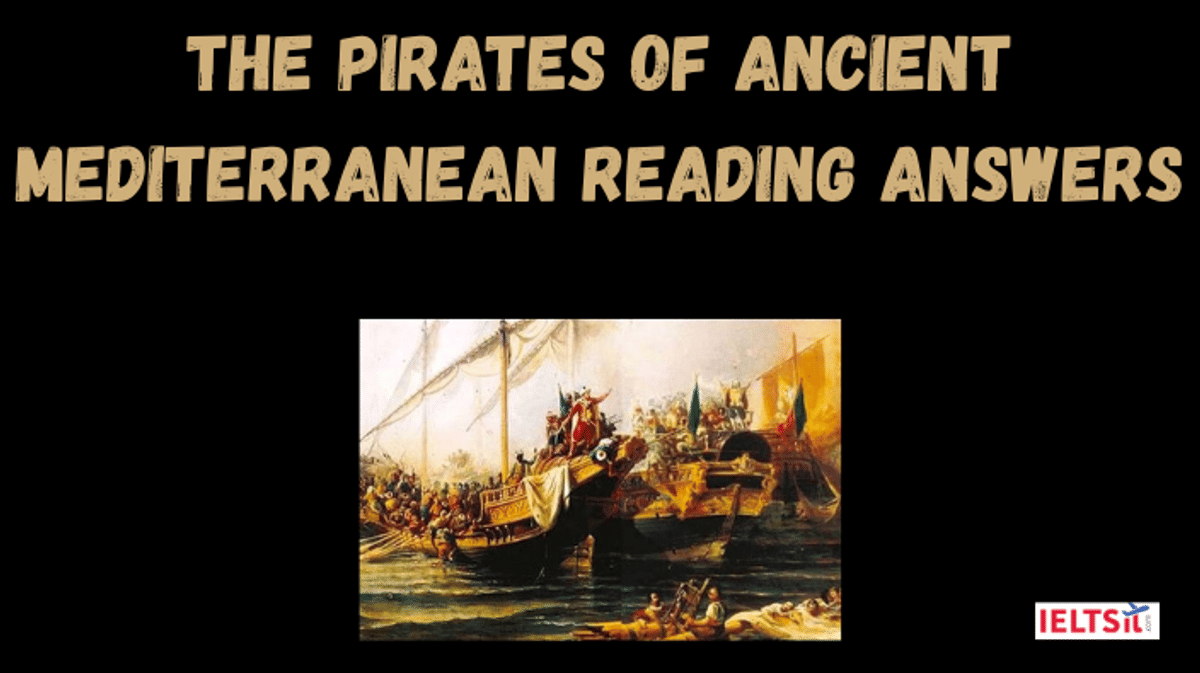
A.When one mentions pirates, an image springs to most people's minds of a crew of misfits, daredevils and adventurers in command of a tall sailing ship in the Caribbean Sea. Yet from the first to the third millennium BCE, thousands of years before these swashbucklers began spreading fear across the Caribbean, pirates prowled the Mediterranean, raiding merchant ships and threatening Vita! trade routes. However, despite all efforts and the might of various ancient states, piracy could not be stopped. The situation remained unchanged for thousands of years. Only when the pirates directly threatened the interests of ancient Rome did the Roman Republic organise a massive fleet to eliminate piracy. Under the command of the Roman general Pompey. Rome eradicated piracy, transforming the Mediterranean into Mare Nostrum (Our Sea).
B.Although piracy in the Mediterranean is first recorded in ancient Egypt during the reign of Pharaoh Amenhotep 111 (c 1390 to 1353 BCE), it is reasonable to assume it predated this powerful civilisation. This is partly due to the great importance the Mediterranean held at this time, and partly due to its geography. While the Mediterranean region is predominantly fertile. Some parts are rugged and hilly. even mountainous. In ancient times, the inhabitants of these areas relied heavily on marine resources. including fish and salt. Most had their own boats, possessed good seafaring skills, and unsurpassed knowledge of the local coastline and sailing routes. Thus, it is not surprising that during hardships, these men turned to piracy. Geography itself further benefited the pirates, with the numerous coves along the coast providing places for them to hide their boats and strike undetected. Before the invention of ocean-going caravels in the 15th century, ships could not easily cross long distances over open water. Thus, in the ancient world, most were restricted to a few well- known navigable routes that followed the coastline. Caught in a trap, a slow merchant ship laden with goods had no other option but to surrender. In addition, knowledge of the local area helped the pirates to avoid retaliation once a state fleet arrived.
C.One should also add that it was not unknown in the first and second millennia BCE for governments to resort to pirates' services, especially during wartime, employing their skills and numbers against their opponents. A pirate fleet would serve in the first wave of attack. preparing the way for the navy. Some of the regions were known for providing safe harbours to pirates, who, in return, boosted the local economy.
D.The first known record of a named group of Mediterranean pirates, made during the rule of ancient Egyptian Pharaoh Akhenaten (c 1353-1336 BCE), was in the Amarna Letters. These were extracts of diplomatic correspondence between the pharaoh and his allies, and covered many pressing issues, including piracy. It seems the pharaoh was troubled by two distinct pirate groups, the Lukka and the Sherden. Despite the Egyptian fleet's best efforts, the pirates continued to cause substantial disruption to regional commerce. In the letters, the king of Alashiya (modern Cyprus) rejected Akhenaten's claims of a connection with the Lukka (based in modern-day Turkey). The king assured Akhenaten that he was prepared to punish any of his subjects involved in piracy.
E.The ancient Greek world's experience of piracy was different from that of Egyptian rulers. While Egypt's power was land-based, the ancient Greeks relied on the Mediterranean in almost all aspects of life. from trade to warfare. Interestingly, in his works, the Iliad and the Odyssey, the ancient Greek writer Homer not only condones but praises the lifestyle and actions of pirates. The opinion remained unchanged in the following centuries. The ancient Greek historian Thucydides, for instance. glorified pirates' daring attacks on ships or even cities. For Greeks, piracy was a part of everyday life. Even high-ranking members of the state were not beyond engaging in such activities. According to the Greek orator Demosthenes, in 355 BCE, Athenian ambassadors made a detour from their official travel to capture a ship sailing from Egypt, taking the wealth found onboard for themselves! The Greeks' liberal approach towards piracy does not mean they always tolerated it, but attempts to curtail piracy were hampered by the large number of pirates operating in the Mediterranean.
F.The rising power of ancient Rome required the Roman Republic to deal with piracy in the Mediterranean. While piracy was a serious issue for the Republic, Rome profited greatly from its existence. Pirate raids provided a steady source of slaves. essential for Rome's agriculture and mining industries. But this arrangement could work only while the pirates left Roman interests alone. Pirate attacks on grain ships, which were essential to Roman citizens, led to angry voices in the Senate, demanding punishment of the culprits. Rome, however, did nothing further to encourage piracy. By the 1st century BCE, emboldened pirates kidnapped prominent Roman dignitaries, asking for a large ransom to be paid. Their most famous hostage was none other
than Julius Caesar, captured in 75 BCE.
G.By now. Rome was well aware that pirates had outlived their usefulness. The time had come for concerted action. In 67 BCE. a new law granted Pompey vast funds to combat the Mediterranean menace. Taking personal command, Pompey divided the entire Mediterranean into 13 districts, assigning a fleet and commander to each. After cleansing one district of pirates, the fleet would join another in the next district. The process continued until the entire Mediterranean was free of pirates. Although thousands of pirates died at the hands of Pompey's troops, as a long-term solution to the problem. Many more were offered land in fertile areas located far from the sea. Instead of a maritime menace, Rome got productive farmers who further boosted its economy
Questions 14-19
The reading passage has seven paragraphs, A-G. Which paragraph contains the following information?
14. A reference to a denial of involvement in piracy
Answer: D
Supporting statement: In the letters, the king of Alashiya (modern Cyprus) rejected Akhenaten's claims of a connection with the Lukka
Keywords: rejected, claims
Keyword Location: Para D, Line 7
Explanation: The king of Alashiya explicitly rejected (denied) the Pharaoh's claims that there was a connection between his people and a group of pirates.
15. Details of how a campaign to eradicate piracy was carried out
Answer: G
Supporting statement: Pompey divided the entire Mediterranean into 13 districts, assigning a fleet and commander to each. After cleansing one district of pirates, the fleet would join another in the next district.
Keywords: Mediterranean, pirates
Keyword Location: Para G, Lines 3-4
Explanation: This paragraph outlines the specific military strategy used by Pompey to systematically clear the sea of pirates.
16. A mention of the circumstances in which states in the ancient world would make use of pirates
Answer: C
Supporting statement: it was not unknown... for governments to resort to pirates' services, especially during wartime, employing their skills and numbers against their opponents.
Keywords: governments, wartime, skills
Keyword Location: Para C, Lines 2-3
Explanation: The text explains that during wars, governments would hire pirates to serve as a "first wave of attack" against enemies
17. A reference to how people today commonly view pirates
Answer: A
Supporting statement: When one mentions pirates, an image springs to most people's minds of a crew of misfits, daredevils and adventurers in command of a tall sailing ship in the Caribbean Sea.
Keywords: springs, crew of misfits, Caribbean Sea
Keyword Location: Para A, Lines 1-2
Explanation: The opening paragraph describes the modern, popular stereotype of pirates (Caribbean-based swashbucklers) that people imagine today.
18. An explanation of how some people were encouraged not to return to piracy
Answer: G
Supporting statement: Many more were offered land in fertile areas located far from the sea. Instead of a maritime menace, Rome got productive farmers
Keywords: land, farmers, maritime menace
Keyword Location: Para G, Lines 7-8
Explanation: Rome provided a long-term solution by giving pirates land away from the coast, encouraging them to become farmers instead of returning to a life of piracy.
19. A mention of the need for many sailing vessels to stay relatively close to land
Answer: B
Supporting statement: Thus, in the ancient world, most were restricted to a few well-known navigable routes that followed the coastline.
Keywords: ancient world, restricted, navigable routes
Keyword Location: Para B, Lines 12-13
Explanation: Before the 15th century, ships could not cross open water easily and were forced to follow routes near the shore, making them vulnerable to pirates hiding in coves
Questions 20 and 21
Choose TWO letters, A.E. Which TWO of the following statements does the writer make about inhabitants of the Mediterranean region in the ancient world?
A. They often used stolen vessels to carry out pirate attacks.
B. They managed to escape capture by the authorities because they knew the area so well.
C. They paid for information about the routes merchant ships would take.
D. They depended more on the sea for their livelihood than on farming.
E. They stored many of the goods taken in pirate attacks in coves along the coastline.
20………….
Answer: B
Supporting statement: knowledge of the local area helped the pirates to avoid retaliation once a state fleet arrived.
Keywords: knowledge, avoid retaliation
Keyword Location: Para B, Line 14
Explanation: The text states that their superior "unsurpassed knowledge of the local coastline" allowed them to hide and evade capture when official authorities (the state fleet) tried to strike back.
21…………..
Answer: D
Supporting statement: In ancient times, the inhabitants of these areas relied heavily on marine resources... Turning to piracy during hardships.
Keywords: relied, marine resources, hardships
Keyword Location: Para B, Lines 5-8
Explanation: The passage clarifies that because some parts of the region were "rugged and hilly" rather than fertile, the people depended more on sea-based resources for their livelihood than on traditional farming.
Questions 22 and 23
Choose TWO letters, A-E. Which TWO of the following statements does the writer make about piracy and ancient Greece?
A. The state estimated that very few people were involved in piracy.
B. Attitudes towards piracy changed shortly after the Iliad and the Odyssey were written.
C. Important officials were known to occasionally take part in piracy.
D. Every citizen regarded pirate attacks on cities as unacceptable.
E. A favourable view of piracy is evident in certain ancient Greek texts.
22…………
Answer: C
Supporting statement: Even high-ranking members of the state were not beyond engaging in such activities.
Keywords: high-ranking, members, state
Keyword Location: Para E, Lines 7-8
Explanation: The writer provides a specific example where Athenian ambassadors (important government officials) detoured from their official duties to capture a ship and steal its wealth for themselves.
23…………..
Answer: E
Supporting statement: the ancient Greek writer Homer not only condones but praises the lifestyle and actions of pirates.
Keywords: Homer, condones, praises
Keyword Location: Para E, Line 4
Explanation: The passage highlights that in famous Greek literature like the Iliad and the Odyssey, the portrayal of piracy was favorable, with the author actually praising the pirates' daring actions.
Questions 24-26
Choose ONE WORD ONLY for each.
Piracy was an issue ancient Rome had to deal with, but it also brought some benefits for Rome. For example, pirates supplied slaves who were important for Rome's industries. However, attacks on vessels transporting 24…………. to Rome resulted in calls for 25………… for the pirates responsible. Nevertheless, piracy continued, with some pirates demanding a 26………..for the return of the Roman officials they captured.
24……….
Answer: GRAIN
Supporting statement: Pirate attacks on grain ships, which were essential to Roman citizens, led to angry voices
Keywords: grain ships, Roman citizen
Keyword Location: Para F, Line 5
Explanation: Attacks on ships carrying grain caused a public outcry because the resource was essential to the city.
25………..
Answer: PUNISHMENT
Supporting statement: led to angry voices in the Senate, demanding punishment of the culprits.
Keywords: Senate, punishment
Keyword Location: Para F, Line 6
Explanation: According to the text, Members of the Roman Senate demanded that the pirates responsible for attacking grain ships be punished.
26………..
Answer: RANSOM
Supporting statement: emboldened pirates kidnapped prominent Roman dignitaries, asking for a large ransom to be paid
Keywords: kidnapped, Roman dignitaries
Keyword Location: Para F, Lines 7-8
Explanation: Pirates began kidnapping high-ranking officials and demanded a "ransom" (payment) for their release.
Read More IELTS Reading Related Samples
- The Impact of Social Media on our Lives Reading Answers
- Comet Missions Reading Answers
- Sea Change for Salinity Reading Answers
- Sydney Opera House Tours Reading Answers
- Pterosaurs Reading Answers
- Using Direct Mail to Sell Your Product Reading Answers
- Study Centre Courses Reading Answers
- Self Study Tips Reading Answers
- Stanfield Theatre Reading Answers
- The Amazing Tuna Fish Reading Answers
- Your Guide to Entertainment in Westhaven Reading Answers
- Research on Improving Agricultural Yields in Africa Reading Answers
- Good Customer Service in Retail Reading Answers
- Its Almost Time for the Next Ripton Festival Reading Answers
- Helping Pupils to Choose Optional Subjects Reading Answers
- National Parks Reading Answers
- Use of Websites for Projects Reading Answers
- Discoveries on the basis of Deductive Reasoning Reading Answers
- Creature Sleeps Reading Answers
- Seeing The Future in With Video Conferencing Reading Answers
- Sports Science in Australia Reading Answers
- The Impact of Social Media on our Lives Reading Answers
- Comet Missions Reading Answers
- Sea Change for Salinity Reading Answers
- Sydney Opera House Tours Reading Answers
- Pterosaurs Reading Answers
- Using Direct Mail to Sell Your Product Reading Answers
- Study Centre Courses Reading Answers
- Self Study Tips Reading Answers
- Stanfield Theatre Reading Answers
- The Amazing Tuna Fish Reading Answers
- Your Guide to Entertainment in Westhaven Reading Answers
- Research on Improving Agricultural Yields in Africa Reading Answers
- Good Customer Service in Retail Reading Answers
- Its Almost Time for the Next Ripton Festival Reading Answers
- Helping Pupils to Choose Optional Subjects Reading Answers
- National Parks Reading Answers
- Use of Websites for Projects Reading Answers
- Discoveries on the basis of Deductive Reasoning Reading Answers
- Successions and Ecosystems Reading Answers
- How to prepare for a Presentation Reading Answers
- Professional Credentials Reading Answers
- An Early Cultural Tourist The Journey of Cyriacus of Ancona
- Train Travel Information Reading Answers
- The Importance of Business Cards Reading Answers
- The Young Persons Railcard Reading Answers
- Keele University Services for Students Reading Answers
- Introduction to the Grounds of Keele University Reading Answers
- A Young Italian Tradition Reading Answers
- Tuning up Your Leadership Skills Reading Answers
Comments