The History of the Violin and Its Development Reading Answers
The History of the Violin and Its Development Reading Answers is an academic reading answers topic. The History of the Violin and Its Development Reading Answers has a total of 14 IELTS questions in total. The text has six sections, A-F. Choose the correct heading for each section from the list of headings below. Write the correct number, I-VI. And Write NO MORE THAN THREE WORDS/OR A NUMBER.
The candidate's understanding and assessment of academic and general texts are examined in the IELTS Reading Section. Using IELTS Reading Practice Questions, you can increase your vocabulary, sharpen your critical reading skills, and become more familiar with the various question types in reading tasks. Furthermore, practice enhances vocabulary and improves analytical reading skills, both of which are necessary for success. It's crucial to understand the guidelines for each question type and develop effective strategies to manage time and achieve excellent band scores.
Check: Get 10 Free Sample Papers
Check: Register for IELTS Coaching - Join for Free Trial Class Now
Topic:
THE HISTORY OF THE VIOLIN AND ITS DEVELOPMENT
A.The violin, viola, and cello were first made in the early 16th century in Italy. The earliest evidence for their existence is in paintings by Gaudenzio Ferrari from the 1530s, though Ferrari's instruments had only three strings. The instruments Ferrari depicts have bulging front and back plates, strings that feed into peg-boxes with side pegs and f-holes. They do not have frets. The only real difference between these instruments and the modern violin is that Ferrari's have three strings and a rather more extravagant curved shape. It is not clear exactly who made these first violins, but there is good evidence that they originate from northern Italy. Violins are likely to have been developed from a number of other string instruments of the 15th and 16th centuries, including the vielle, rebec, and lira da braccio. The history of bowed string instruments in Europe goes back to the 9th century. Since their invention, instruments in the violin family have seen a number of changes. The overall pattern for the instrument was set in the 17th century.
B.At first, the violin was not popular. In fact, it was considered a musical instrument of low status. But by the 1600s, well-known composers like Claudio Monteverdi used the violin in his operas, and the violins' status grew. The violins' prestige continued to rise during the Baroque period once major composers began dedicating time to writing for the violin. By the mid-18th century, the violin enjoyed a vital place in instrumental music ensembles. In the 19th century, the violins' rise to fame continued in the hands of virtuoso violinists such as Nicolo Paganini and Pablo de Sarasate. In the 20th century, the violin reached new heights both in technical and
artistic aspects. Isaac Stern, Fritz Kreisler, and Itzhak Perlman are some of the well-known icons.
C.The Stroh violin used mechanical amplification similar to that of an unelectrified gramophone to boost sound volume. In the late 19th and early 20th centuries, before electronic sound amplification became common, Stroh violins were used particularly in the recording studio. These violins with directional horns were better suited to the demands of the early recording industry's technology than the traditional violin. Stroh was not the only person who made instruments of this class. Over twenty different inventions appear in the Patent books up to 1949. Often mistaken for Stroh and interchangeably known as being Stroh-viols, phono-fiddles, horn-violins, or trumpet-violins, these other instruments have slipped into comparative obscurity.
D.The history of the electric violin spans the entire 20th century. The success of electrical amplification, recording, and playback devices brought an end to the use of the Stroh violin in broadcast and recording. Acoustic-electric violins have a hollow body with sound holes and may be played with or without amplification. Solid-body electric violins produce very little sound on their own and require the use of an electronic sound reinforcement system, which usually includes equalization and may also apply sonic effects.
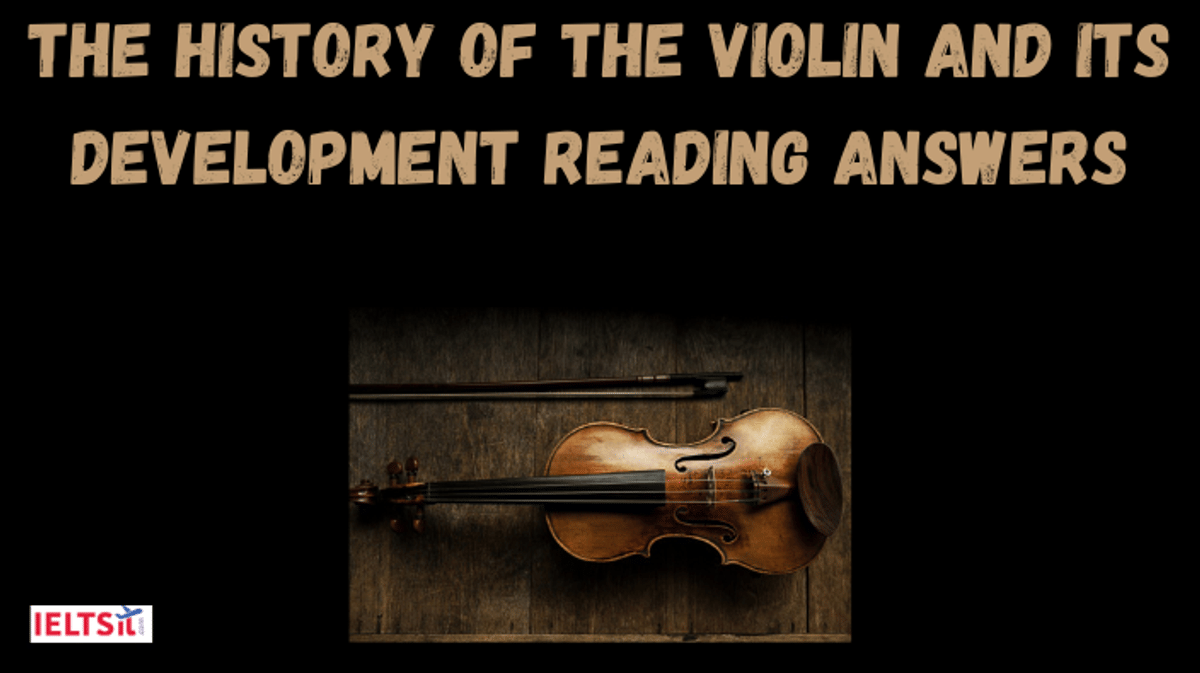
E.Most violins are made from approximately 70 different pieces of spruce or maple. The violin parts include the scroll, tuning pegs, peg box, neck, frets, fingerboard, F-holes, strings, bridge, tailpiece, and chin rest. The bow includes the stick, hair, and screw. A violin bow is usually made with between 150 and 200 hairs. These bows can be made with horse hair, nylon ,and a variety of other materials. Violins are available in different sizes. Beginners usually begin with smaller instruments and eventually move to full-size violins. When playing the violin, the musician rests the violin under the chin and uses their left hand's fingers to press strings on the neck while bowing or plucking the string at the bridge. When playing the violin, the bow is drawn at right angles across the strings with the right hand to make sound. The violin is the smallest instrument in the violin family. It also has the highest pitch of the four types of instruments.
F.The viola is a member of the violin family and is a bit larger than the violin and has a lower pitch. The cello is a member of the Violin family and is larger than the viola. It rests on a metal spike that touches the ground while playing. The double bass is the largest instrument in the violin family. It also rests on the floor, and the musician stands to play. It has a much lower pitch than the violin. The folk music version of the violin is the fiddle. Aging and softening of the wood work together to make a violin more responsive with a warmer tone. It is this warmth and ease of response that often make old violins a treasure. Every violin has small differences from other instruments that make it unique. Uniqueness can be good or bad depending on whether the violin conforms to accepted qualities or has qualities that are undesirable, such as wolf tones or dead spots (unresponsive areas). In the hands of a master, a violin can bring the most subtle emotion to an entire symphony hall.
Questions 27-32
The text has six sections, A-F. Choose the correct heading for each section from the list of headings below. Write the correct number, I-VI.
LIST OF HEADINGS
I. The Violin family
II. Electrical amplification of violins
III. Adulation of the Violin
IV. Violin with directional horns
V. Structural details of the violin
VI. Annals of Violin
27. Section A
Answer: VI
Supporting statement: The violin, viola, and cello were first made in the early 16th century in Italy. The earliest evidence for their existence is in paintings by Gaudenzio Ferrari from the 1530s... The history of bowed string instruments in Europe goes back to the 9th century.
Keywords: 16th century, earliest evidence
Keyword Location: Para A, Lines 1-2
Explanation: Section A describes the origins of the violin, including its first known appearance (16th century), its possible ancestors (vielle, rebec), and the long history of bowed strings, making "Annals of Violin" (historical records) the best fit.
28 Section B
Answer: III
Supporting statement: the violins' status grew. The violins' prestige continued to rise during the Baroque period... the violin enjoyed a vital place in instrumental music ensembles. In the 19th century, the violins' rise to fame continued in the hands of virtuoso violinists
Keywords: status grew, prestige, vital place
Keyword Location: Para B, Line 3
Explanation: Section B tracks the violin's shift from "low status" to one of great importance, prestige, and "fame," which directly corresponds to "Adulation" (great admiration or praise).
29. Section C
Answer: IV
Supporting statement: The Stroh violin used mechanical amplification similar to that of an unelectrified gramophone to boost sound volume. These violins with directional horns were better suited to the demands of the early recording industry's technology
Keywords: Stroh violin, directional horns, horn-violins
Keyword Location: Para C, Lines 1-6
Explanation: Section C is entirely about the Stroh violin and similar instruments, which are characterized by their "directional horns" and are sometimes called "horn-violins" or "trumpet-violins."
30. Section D
Answer: II
Supporting statement: The history of the electric violin spans the entire 20th century. The success of electrical amplification... Acoustic-electric violins have a hollow body... Solid-body electric violins produce very little sound on their own and require the use of an electronic sound reinforcement system
Keywords: electric violin, electrical amplification
Keyword Location: Para D, Lines 1-2
Explanation: Section D describes the development and different types of the modern electric violin, focusing entirely on how these instruments use "electrical amplification.
31. Section E
Answer: V
Supporting statement: Most violins are made from approximately 70 different pieces of spruce or maple. The violin parts include the scroll, tuning pegs, peg box, neck, frets, fingerboard, F-holes, strings, bridge, tailpiece, and chin rest. The bow includes the stick, hair, and screw. A violin bow is usually made with between 150 and 200 hairs.
Keywords: made from, violin parts
Keyword Location: Para E, Lines 1-2
Explanation: Section E breaks down the violin and its bow into their components (scroll, pegs, bridge, stick, hair, etc.) and materials (spruce, maple, horse hair), which are the instrument's structural details.
32. Section F
Answer: I
Supporting statement: The viola is a member of the violin family and is a bit larger than the violin... The cello is a member of the Violin family and is larger than the viola... The double bass is the largest instrument in the violin family. The folk music version of the violin is the fiddle.
Keywords: viola, cello, double bass, violin family, fiddle
Keyword Location: Para F, Lines 1-5
Explanation: Section F compares the violin to its related instruments, the viola, cello, double bass, and fiddle, focusing on their differences in size and pitch, thus covering the entire "Violin family."
Questions 33-40
Write NO MORE THAN THREE WORDS/OR A NUMBER.
33. What does Stroh violin used to magnify sound volume?
Answer: MECHANICAL AMPLIFICATION
Supporting statement: The Stroh violin used mechanical amplification similar to that of an unelectrified gramophone to boost sound volume.
Keywords: mechanical amplification, unelectrified gramophone
Keyword Location: Para C, Lines 1-2
Explanation: The passage directly states that the Stroh violin used mechanical amplification.
34. During which period did composers embark on to dedicate time writing for the violin?
Answer: BAROQUE
Supporting statement: The violins' prestige continued to rise during the Baroque period once major composers began dedicating time to writing for the violin.
Keywords: Baroque period, major composers
Keyword Location: Para B, Lines 3-4
Explanation: The text specifies that the prestige rose during the "Baroque period" when composers started writing for it.
35. Which violins were first made in the 16th century in Italy?
Answer: VIOLA AND CELLO
Supporting statement: The violin, viola, and cello were first made in the early 16th century in Italy.
Keywords: violin, viola, and cello
Keyword Location: Para A, Line 1
Explanation: The list of instruments first made in the 16th century includes the viola and cello, along with the violin.
36. Name the largest instrument in the violin family?
Answer: DOUBLE BASS
Supporting statement: The double bass is the largest instrument in the violin family.
Keywords: double bass, largest instrument
Keyword Location: Para F, Line 3
Explanation: The text clearly identifies the double bass as the largest member of the family.
37. What does the bow comprises of?
Answer: TICK, HAIR, SCREW
Supporting statement: The bow includes the stick, hair, and screw.
Keywords: stick, hair, and screw
Keyword Location: Para E, Line 3
Explanation: The passage lists the three main components of the bow.
38. Up to a year less than 1950, how many inventions appeared in the patent book?
Answer: OVER TWENTY/OVER 20
Supporting statement: Over twenty different inventions appear in the Patent books up to 1949.
Keywords: Over twenty, Patent books
Keyword Location: Para C, Line 6
Explanation: The year "a year less than 1950" is 1949, and the number of inventions is "over twenty."
39. What is the folk music version of the violin called?
Answer: FIDDLE
Supporting statement: The folk music version of the violin is the fiddle.
Keywords: folk music, fiddle
Keyword Location: Para F, Line 5
Explanation: The passage provides the alternative name for the folk music version.
40. Which violin called off the use of the Stroh violin in broadcast and recording?
Answer: ELECTRIC VIOLIN
Supporting statement: The history of the electric violin spans the entire 20th century. The success of electrical amplification, recording, and playback devices brought an end to the use of the Stroh violin in broadcast and recording.
Keywords: electric violin, 20th century
Keyword Location: Para D, Lines 1-2
Explanation: The rise of electrical amplification, pioneered by the electric violin, made the mechanically amplified Stroh violin obsolete.
Read More IELTS Reading Related Samples
- Polo Reading Answers
- The Reindeer Reading Answers
- Drive on Low Beam in Fog Reading Answers
- Are You Being Bullied Reading Answers
- Theatre Reading Answers
- Can you Do Them at the Same Time Reading Answers
- Numeracy in Animals Reading Answers
- Non Pesticide Management of Crop in India Reading Answers
- Swordfish Reading Answers
- Mojito Reading Answers
- Calculating the Risk Reading Answers
- The Future of Getting Around in Cities Reading Answers
- Apollo 11 The First Moon Landing Reading Answers
- Potato Reading Answers
- Why Do Clocks go Clockwise Reading Answers
- Plastic Eating Worms Reading Answers
- Education To Be More Reading Answers
- Photosynthesis Reading Answers
- Giving Business presentations Reading Answers
- Business Continuity Planning Reading Answers
- Maintaining a Facility Reading Answers
- Roman Roads Reading Answers
- The Rise of Artificial Meat Reading Answers
- The Mystery of Monarch Butterfly Migration Reading Answers
- The Secret Lives of Urban Foxes Reading Answers
- The Forgotten Language of Whistles Reading Answers
- Sleep better than Midnight Oil on the Eve of Exams Reading Answers
- Guidelines for Home Based Online Workers in India Reading Answers
- Urban Pet Park Rules and Regulations Reading Answers
- How to Submit Articles to Lifestyle Magazines Reading Answers
- The World of Thrift Shopping A Growing Trend Reading Answers
- The Changing World of Magazines Reading Answers
- Urban Wildlife A growing Presence Reading Answers
- The Medicine of the Future Reading Answers
- Renting a Co working Space in Urban Centres Reading Answers
- The Silent Monks of Teralum Reading Answers
- Backbiting and Gossiping The Social Mix Reading Answers
- When Death Comes Reading Answers
- Savanna Rain The Lifeblood of Grassland Ecosystem Reading Answers
- Why Do Some Cultures Avoid Eye Contact Reading Answers
- The Future of Work Will Automation Replace Us All Reading Answers
- A Guide to Renting Shared Accommodation Reading Answers
- How to register a Small Business in the UK Reading Answers
- Orion Customer Service Center Complaint Handling Procedure Reading Answers
- Greenway Furniture Factory Health and Safety Guidelines Reading Answers
- Towerhill Apartments Residents Notice Board Reading Answers
- The Rise of Smart Cities Integrating Technology with Urban Life Reading Answers
- The Renaissance of Traditional Fermentation Reading Answers
- The Architecture of Ice Life Inside Ice Hotels Reading Answers
- The Rise of the Tiny House Movement Reading Answers
Comments