The Anthropocene Reading Answers
The Anthropocene Reading Answers is an academic reading answers topic. The Anthropocene Reading Answers has a total of 13 IELTS questions, such as
- Reading Passage 2 has seven paragraphs A-G. Which paragraph contains the following information? Write the correct letter A-G.
- Choose NO MORE THAN TWO WORDS for each.
- Look at the following statements and a list of terms. Write the correct letter, A-D. Match each statement with the correct term A-D. Which paragraph contains the following information?
The IELTS Reading section is an essential part of the test that evaluates a candidate's comprehension and analysis of various passage types. You will work through a number of IELTS reading practice problems in this section that resemble actual test situations. These questions are designed to help you improve your ability to recognise essential concepts, extract particular facts, and make inferences. Practising these IELTS reading problems can help you get comfortable with the structure and increase your confidence for the exam, regardless of whether you are studying for the Academic or General Training module.
Check: Get 10 Free Sample Papers
Check: Register for IELTS Coaching - Join for Free Trial Class Now
Section 1
THE ANTHROPOCENE
The human epoch
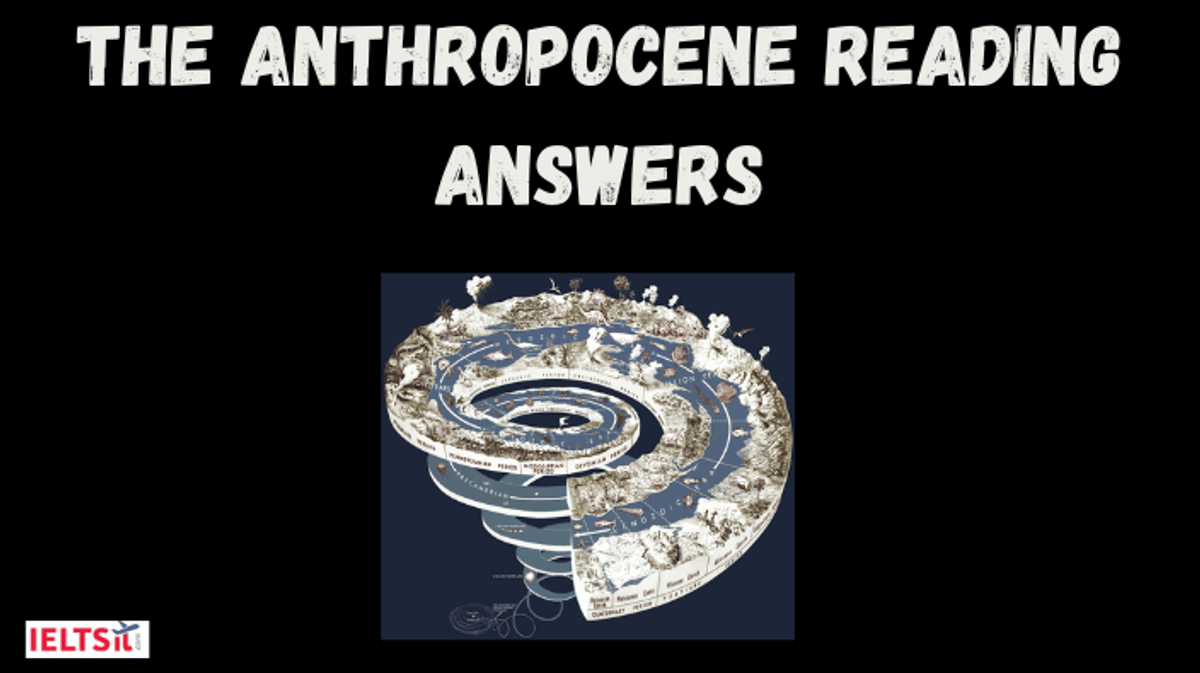
A.The geological timescale is used to classify the periods of the development of the Earth. It is done by observing layers of the rock and ice formations of the Earth and the fossils within them, and relating them to events that have occurred. The smallest division of these time periods is an epoch, and we are currently in the Holocene, which began about 12,000 years ago at the end
of the Paleolithic ice age. Usually, the way a new geologic epoch is defined is by identifying a global signal that can be seen in the future geological record. The extinction of the dinosaurs 66 million years ago, which ended the Cretaceous epoch and began the Paleogene. is one such example. This is signalled by the presence of the metal Iridium in the geological layer of that time. It is thought to have been released from the meteorite that collided with Earth and caused the mass extinction.
B.In the last twenty years, there has been scientific debate as to whether a new epoch has begun. This period has been called the Anthropocene and is measured from the time human activity began to seriously impact the climate and ecosystems of the planet, which was around 1950. The word Anthropocene contains the root anthropo, meaning human and cene, meaning time. The term has not yet been officially recognized by the International Commission on Stratigraphy (ICS) and the International Union of Geological Sciences (IUGS), though the Anthropocene Working Group (AWG) of the ICS has proposed it. The geological feature which is being suggested as the global indicator of the new epoch is the layer of radiation that was embedded in the earth during the period of nuclear testing in the second half of the last century.
C.The two previous epochs, the Pleistocene and the Pliocene, each lasted around two and a half million years, and one of the criticisms of the suggestion is that switching to another epoch from one that has been in existence for only 12,000 years is premature. However, the environmental impact that man has had on the planet in the last seventy years is not only overwhelming but irreversible. The climate change that is currently occurring is likely to lead to mass extinctions not unlike that which ended the Cretaceous.
D.The presence of a radioactive strata is just one indicator of human impact on the planet. Further evidence of the onset of the Anthropocene includes the unburned powdery soot emitted by power stations, which consists largely of carbon, produced by the incomplete burning of organic matter. There is a permanent layer of airborne black carbon now embedded in sediment and glacial ice. We have also put so much plastic into our waterways and oceans that plastics are certain to leave identifiable fossil records for future generations to discover. Levels of CO in the atmosphere are increasing at the fastest rate for over 60 million years, which will affect the geological record by warming the atmosphere and causing climate change events such as rising sea levels.
E.In the 70-million-year history of complex life on Earth, we are currently seeing the sixth mass extinction of animal life. This though, is less likely to be regarded as a signal as the animals at risk are those that are particular to regions of the planet and not dispersed worldwide. This is despite the fact that the Earth will experience the loss of 75 per cent of species in the next few centuries if current trends continue. On the other hand, some species have had human help to spread rapidly across the world. The domestic chicken may be a fossil that defines the Anthropocene for future geologists. Its bones will be fossilized in thousands of landfill sites and rubbish tips around the world.
F.The thirty-five scientists on the AWG voted 30 to three in favour of formally designating the Anthropocene (two absented themselves) are now determining which signals are the clearest. They also need to decide on the location that defines the start of the Anthropocene. Though changes in climate and widespread pollution are clear indicators of human impact, a geological
marker of a change is technically required and it needs to be reflected as a division in rock or ice strata. The search for this is currently underway in mud sediments off the coast of California and the Ernesto cave in northern Italy, where stalactites and stalagmites accumulate annual rings. Sediments in lakes, coral reefs, tree rings, ice cores from Antarctica and even layers of
rubbish in landfill sites are also being examined.
G.The push for the change to the new epoch was first suggested in the year 2000 by the Nobel prize-winning scientist Paul Crutzen, in the hope that it might force the world to take responsibility for what is happening to our planet. However, geologists are unlikely to agree to such a change for political reasons alone, no matter how worthy they are. Whether we remain in the Holocene or find ourselves in the Anthropocene, it will not affect the critical state our planet's global ecology currently finds itself.
Questions 14-18
Reading Passage 2 has seven paragraphs A-G. Which paragraph contains the following information? Write the correct letter A-G.
You may use any letter more than once.
14. other factors that could be considered signals
Answer: D
Supporting statement: Further evidence of the onset of the Anthropocene includes the unburned powdery soot emitted by power stations... We have also put so much plastic into our waterways and oceans... Levels of CO2 in the atmosphere are increasing
Keywords: unburned powdery soot, plastic, CO2
Keyword Location: Para D, Lines 2-5
Explanation: This paragraph details other forms of geological evidence—soot, plastic, and CO2 levels—beyond the primary nuclear indicator.
15. the damage cannot be undone
Answer: C
Supporting statement: However, the environmental impact that man has had on the planet in the last seventy years is not only overwhelming but irreversible.
Keywords: irreversible
Keyword Location: Para C, Line 5
Explanation: The text uses the word "irreversible" to describe the environmental impact, meaning the damage cannot be undone.
16. places that show where the epoch began
Answer: F
Supporting statement: The search for this is currently underway in mud sediments off the coast of California and the Ernesto cave in northern Italy, where stalactites and stalagmites accumulate annual rings. Sediments in lakes, coral reefs, tree rings, ice cores from Antarctica and even layers of rubbish in landfill sites are also being examined.
Keywords: coast of California, Ernesto cave in northern Italy, Sediments in lakes
Keyword Location: Para F, Lines 6-8
Explanation: The paragraph lists several specific locations being examined to define the start of the Anthropocene.
17. the person who named the epoch
Answer: G
Supporting statement: The push for the change to the new epoch was first suggested in the year 2000 by the Nobel prize-winning scientist Paul Crutzen
Keywords: Paul Crutzen
Keyword Location: Para G, Line 2
Explanation: Paul Crutzen is identified as the scientist who first suggested the term/change.
18. an animal that has multiplied
Answer: E
Supporting statement: On the other hand, some species have had human help to spread rapidly across the world. The domestic chicken may be a fossil that defines the Anthropocene for future geologists
Keywords: domestic chicken, rapidly across
Keyword Location: Para E, Line 6
Explanation: The domestic chicken is given as an example of a species that has spread widely due to human activity and will leave a fossil record
Questions 19-20
Choose NO MORE THAN TWO WORDS for each.
A NEW ERA
The Earth has been in the Holocene era for the last 12,000 years, but some scientists believe we have entered a new epoch that has been called the Anthropocene. This geologic time period is called this because the Earth has been unquestionably transformed by the 19………….. of its human population.
Answer: ACTIVITY or HUMAN ACTIVITY
Supporting statement: This period has been called the Anthropocene and is measured from the time human activity began to seriously impact the climate and ecosystems of the planet, which was around 1950.
Keywords: human activity
Keyword Location: Para B, Line 2
Explanation: The Anthropocene is defined by the time human activity began seriously impacting the planet.
The change of an epoch is always marked by a 20…………….. that is visible in a geological layer of the planet.
Answer: GLOBAL SIGNAL
Supporting statement: Usually, the way a new geologic epoch is defined is by identifying a global signal that can be seen in the future geological record.
Keywords: geologic epoch, global signal
Keyword Location: Para A, Lines 5-6
Explanation: The definition of a new epoch requires identifying a global signal in the geological record.
An example of this is the presence of a 21………….that came from the meteorite that struck the earth at the end of the Cretaceous period.
Answer: METAL IRIDIUM
Supporting statement: This is signalled by the presence of the metal Iridium in the geological layer of that time. It is thought to have been released from the meteorite that collided with Earth and caused the mass extinction
Keywords: metal, meteorite
Keyword Location: Para A, Lines 8-9
Explanation: The geological signal for the start of the Paleogene epoch was the metal Iridium
The defining factor for the Anthropocene is the geological evidence of the 22…………… That occurred from the 1950s.
Answer: RADIATION
Supporting statement: The geological feature which is being suggested as the global indicator of the new epoch is the layer of radiation that was embedded in the earth during the period of nuclear testing in the second half of the last century.
Keywords: layer of radiation, nuclear testing
Keyword Location: Para B, Lines 8-9
Explanation: The key indicator being proposed is the layer of radiation from nuclear testing
Questions 23-26
Look at the following statements (Questions 23-26) and a list of terms. Write the correct letter, A-D. Match each statement with the correct term A-D. Which paragraph contains the following information?
23. It is what the population of the world will have to accept blame for.
Answer: D
Supporting statement: it might force the world to take responsibility for what is happening to our planet. (Referring to the push for the change due to impact).
Keywords: take responsibility
Keyword Location: Para G, Line 3
Explanation: The proposal for the Anthropocene was motivated by a desire for the world to "take responsibility" for its actions, which relate to the extensive environmental damage.
24. It is not regarded as a global signal as it affects local populations.
Answer: B
Supporting statement: This though, is less likely to be regarded as a signal as the animals at risk are those that are particular to regions of the planet and not dispersed worldwide
Keywords: signal, not dispersed worldwide
Keyword Location: Para E, Lines 2-3
Explanation: The current mass extinction is considered less likely to be a signal because the affected species are regional, not global.
25. It is the physical place where an epoch is said to begin.
Answer: C
Supporting statement: They also need to decide on the location that defines the start of the Anthropocene. ...a geological marker of a change is technically required and it needs to be reflected as a division in rock or ice strata.
Keywords: Anthropocene, geological marker
Keyword Location: Para F, Lines 3-5
Explanation: This refers to the geological division or marker that physically defines the start location of a new epoch.
26. It is part of the geological record due to energy production.
Answer: A
Supporting statement: Further evidence of the onset of the Anthropocene includes the unburned powdery soot emitted by power stations... There is a permanent layer of airborne black carbon now embedded in sediment and glacial ice
Keywords: power stations
Keyword Location: Para D, Line 3
Explanation: Black carbon (soot) is emitted by power stations (energy production) and is now a permanent layer in the geological record.
TERMS USED TO DISCUSS THE ANTHROPOCENE
A. black carbon layer
B. mass extinction
C. geological division
D. environmental damage
Read More IELTS Reading Related Samples
- Polo Reading Answers
- The Reindeer Reading Answers
- Drive on Low Beam in Fog Reading Answers
- Are You Being Bullied Reading Answers
- Theatre Reading Answers
- Can you Do Them at the Same Time Reading Answers
- Numeracy in Animals Reading Answers
- Non Pesticide Management of Crop in India Reading Answers
- Swordfish Reading Answers
- Mojito Reading Answers
- Calculating the Risk Reading Answers
- The Future of Getting Around in Cities Reading Answers
- Apollo 11 The First Moon Landing Reading Answers
- Potato Reading Answers
- Why Do Clocks go Clockwise Reading Answers
- Plastic Eating Worms Reading Answers
- Education To Be More Reading Answers
- Photosynthesis Reading Answers
- Giving Business presentations Reading Answers
- Business Continuity Planning Reading Answers
- Maintaining a Facility Reading Answers
- Roman Roads Reading Answers
- The Rise of Artificial Meat Reading Answers
- The Mystery of Monarch Butterfly Migration Reading Answers
- The Secret Lives of Urban Foxes Reading Answers
- The Forgotten Language of Whistles Reading Answers
- Sleep better than Midnight Oil on the Eve of Exams Reading Answers
- Guidelines for Home Based Online Workers in India Reading Answers
- Urban Pet Park Rules and Regulations Reading Answers
- How to Submit Articles to Lifestyle Magazines Reading Answers
- The World of Thrift Shopping A Growing Trend Reading Answers
- The Changing World of Magazines Reading Answers
- Urban Wildlife A growing Presence Reading Answers
- The Medicine of the Future Reading Answers
- Renting a Co working Space in Urban Centres Reading Answers
- The Silent Monks of Teralum Reading Answers
- Backbiting and Gossiping The Social Mix Reading Answers
- When Death Comes Reading Answers
- Savanna Rain The Lifeblood of Grassland Ecosystem Reading Answers
- Why Do Some Cultures Avoid Eye Contact Reading Answers
- The Future of Work Will Automation Replace Us All Reading Answers
- A Guide to Renting Shared Accommodation Reading Answers
- How to register a Small Business in the UK Reading Answers
- Orion Customer Service Center Complaint Handling Procedure Reading Answers
- Greenway Furniture Factory Health and Safety Guidelines Reading Answers
- Towerhill Apartments Residents Notice Board Reading Answers
- The Rise of Smart Cities Integrating Technology with Urban Life Reading Answers
- The Renaissance of Traditional Fermentation Reading Answers
- The Architecture of Ice Life Inside Ice Hotels Reading Answers
- The Rise of the Tiny House Movement Reading Answers
Comments