Describe An Important Plant In Your Country Cue Card
Describe An Important Plant In Your Country IELTS Speaking Cue Card model answers have been provided below. The answers are centred upon questions - What is it?, Where do You See it?, What does it look like?, And Explain Why it is Important?
What is a Cue Card: IELTS Speaking Part 2 includes cue cards containing topics on which candidates are to speak. Candidates get 2-3 minutes time to speak and 1 minute for note-taking. In IELTS Speaking part 2, candidates' proficiency in grammar and vocabulary is assessed along with their confidence to speak in English.
Check: Get 10 Free IELTS Sample Papers
Check: Register for IELTS Coaching - Join for Free Trial Class Now
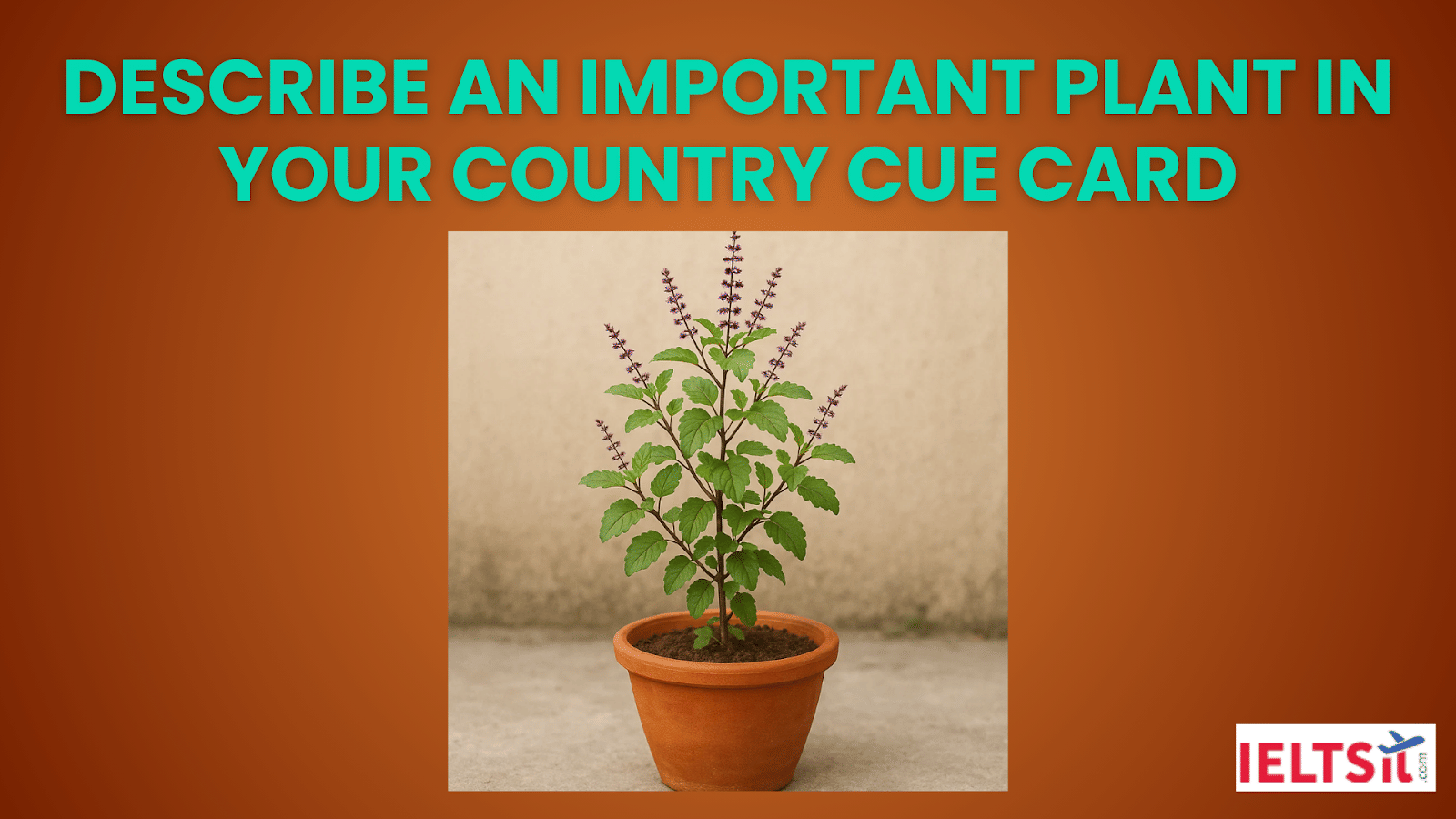
Topic: Describe An Important Plant In Your Country Cue Card
You should say:
- What is it?
- Where do You See it?
- What does it look like?
- And Explain Why it is Important?
Answer 1:
What is it?
In India, the neem tree—Azadirachta indica if you want to get scientific—is a big deal. People call it the “village pharmacy” for a reason. It’s woven into almost everything: medicine, daily life, even the way we think about the environment. Neem’s been around forever, helping out as a natural remedy long before modern pharmacies showed up.
Where do You See it?
You’ll spot neem trees everywhere. They line the roadsides, pop up in schoolyards, parks, temples, and they’re all over residential areas. In villages, folks love planting neem near their homes for shade. Even in cities, city planners go for neem because it shrugs off pollution and handles crazy weather like a champ. I see plenty of neem trees around my neighborhood, especially near public buildings.
What does it look like?
Looks-wise, neem trees are pretty impressive. They’re medium to tall, with thick, rough brown trunks and branches that stretch wide, covered in dense, green leaves. The leaves themselves are small, narrow, and bright green, growing in clusters. Come spring, the tree bursts into tiny white flowers that smell gentle and sweet. Those turn into little green fruits later on—kind of like mini olives. The whole tree gives off a sturdy, tough vibe.
And Explain Why it is Important?
But what really makes neem stand out is its healing power. People use every part of it—leaves, bark, seeds, oil—in Ayurveda to tackle skin issues, infections, and stomach troubles. Neem oil even finds its way into lotions and shampoos. Beyond health, neem’s great for the environment. It cleans the air, gives off oxygen, and its natural insect-repelling qualities help farmers make pesticides that don’t wreck the earth. During festivals, people hang neem leaves for good luck and protection from illness. With all that going for it, it’s no wonder neem is one of India’s most treasured trees.
Answer 2:
What is it?
Tulsi, or Holy Basil, is a favorite of mine in my country. It is a very common sight in almost every Indian household. It is cherished not only for its religious importance but also for its incredible health benefits. In Indian culture, tulsi is not just a herb; it symbolizes purity and spreads positivity wherever it grows.
Where do You See it?
You can spot tulsi everywhere—courtyards, balconies, gardens, temple grounds. Traditional homes often have it growing on a special raised platform called a Tulsi Vrindavan. These days, people in apartments just keep it in pots. I actually grow tulsi at home myself, and so do a lot of my relatives.
What does it look like?
The plant is pretty small, with a thin stem that’s sometimes green, sometimes a bit purple. The leaves are soft, oval, and they give off a strong, fresh scent whenever you touch them. Tiny purple or white flowers grow in little clusters along the stems. Tulsi might look fragile, but it’s tough and doesn’t need much care to thrive.
And Explain Why it is Important?
What truly sets tulsi apart is its medicinal value. It is used to combat coughs, colds, fever, and sore throats. Tulsi tea is a common practice in many households—it increases immunity and reduces stress. It is also used for worship; in many households, tulsi is worshiped every day because it is believed to provide peace, health, and protection from negativity. It also purifies the air by absorbing harmful gases. With so many benefits associated with it, it is no surprise that tulsi is one of the most precious plants in India.
Answer 3:
What is it?
The banyan tree really stands out in my country. You can’t miss it—huge, old, and full of life. People see it as a symbol of strength and unity, and honestly, you’ll find it woven into Indian culture in all sorts of ways.
Where do You See it?
Take a leisurely stroll through any village, and you will find the banyan tree right at the center of things, perhaps alongside a temple or flourishing along a busy road. It is a place where people congregate to chat, to lounge around, or to discuss some pressing issue. I have seen banyans planted alongside ancient temples or busy markets, their massive canopies stretching far and wide to provide cooling shade for all around.
What does it look like?
But the banyan tree has a story of its own to tell. It is a giant, with a thick trunk and branches that seem to stretch on and on. And then there are the aerial roots, like long threads of stringy material hanging from the branches, slowly making their way down to the ground and turning into new trunks. The leaves are wide and a deep, dark green, providing thick cover. Sometimes, a banyan tree can be more like a whole forest in itself.
And Explain Why it is Important?
There are many reasons why people are so interested in banyan trees. In terms of the environment, banyan trees produce a lot of oxygen and provide a habitat for birds and animals. They also act as a cooling agent and prevent soil erosion. In terms of culture, banyan trees are considered sacred. They have been mentioned in old tales and religious texts, and married women pray to banyan trees for the well-being of their families. In terms of society, banyan trees have always been a meeting point for people, where they come to discuss and decide things. Taking all these factors into consideration, it is clear why the banyan tree is such an integral part of Indian life.
Check More IELTS Cue Cards
- Describe A Place That You Have Visited and Particularly Liked Cue Card
- Describe a place you would like to visit Cue Card
- Describe an Idea you had for Improving Something at Work or College Cue Card
- Describe your Study Room Cue Card
- Describe a Place that has a Special Meaning to you Cue Card
- Describe your Favorite Location for Swimming Cue Card
- Describe a Speech that Somebody gave and you Liked Cue Card
- Describe a Time when you were very Afraid Cue Card
- Describe a Time that You and Your Friend had a Disagreement Cue Card
- Describe an Unusual Job Cue Card
- Describe a Lake, A river or A Sea You Like to Visit Cue Card
- Describe an Important Historical Event in Your Country Cue Card
- Favourite Season Cue Card
- Describe a family not your own that you like Cue Card
- Interesting Places Cue Card
- Describe a Health Problem you Once had Cue Card
- Describe a Time when you were Stuck in a Traffic Jam Cue Card
- Describe an Educational TV Programme that you have Seen Cue Card
- Describe a Character In A Movie/Tv Program/Story Cue Card
- Describe a Quiet Place You Like to Spend Your Time in Cue Card
- Describe One of Your Grandparents' Job Cue Card
- A Person who can speak a Foreign Language Cue Card
- A Vehicle You Would Like to Own Cue Card
- Person Who has Influenced You to do Better in Your Life Cue Card
- A TV Programme That Inspires You A Lot Cue Card
- A City You Want To Visit Cue Card
- Describe Something Special you Want to Buy in the Future Cue Card
- Describe an Exciting Sport You Know About Cue Card
- Describe a Country You Have Visited Cue Card
- Describe a Crowded Place that you have visited Cue Card
- Describe Your Favorite Song Cue Card
- A Person With Interesting Ideas Cue Card
- Describe Something You Can Make By Yourself Cue Card
- Describe a Wedding Ceremony You Attended Cue Card
- Describe Your Favorite TV Program Cue Card
- Describe a Family Member You Spend the Most Time With Cue Card
- Describe A Popular Product From Your Hometown Cue Card
- Describe a Time You Missed an Appointment for Something Cue Card
- Describe a Popular Musical Instrument in Your Country Cue Card
- Describe a Polite Person You Met Cue Card
- Unforgettable Meal IELTS Cue Card
- Describe Your Favourite Park In Your City Cue Card
- Describe a Multinational Company Cue Card
- Describe a Time When You Were in Trouble or When Faced Difficulty in Using The Computer Cue Card
- Describe A Time When You Were Cheated Cue Card
- Describe a Situation When You Had to be Polite Cue Card
- Describe a Film You Would Like to Share With Your Friends Cue Card
- Describe a Country Where You Would Like To Work For a Short Time Cue Card
- Your favourite song IELTS Cue Card
- Describe a Bicycle Bike Car Tour IELTS Cue Card
Comments