Describe a Traditional Product in Your Country Cue Card
Describe a Traditional Product in Your Country IELTS Speaking Cue Card model answers have been provided below. The answers are centred upon questions - What Is It?, How Is It Made?, When Did You First Try It? And Explain Why Do You Like It?
What is a Cue Card: IELTS Speaking Part 2 includes cue cards containing topics on which candidates are to speak. Candidates get 2-3 minutes time to speak and 1 minute for note-taking. In IELTS Speaking part 2, candidates' proficiency in grammar and vocabulary is assessed along with their confidence to speak in English.
Check: Get 10 Free IELTS Sample Papers
Check: Register for IELTS Coaching - Join for Free Trial Class Now
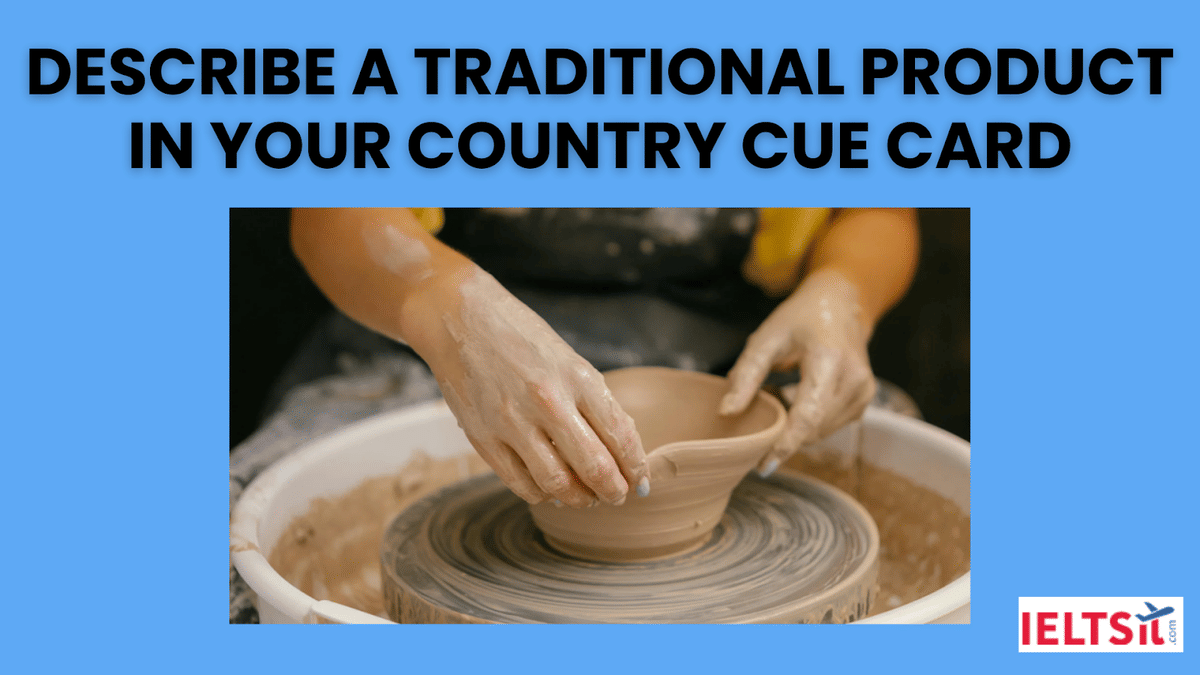
Topic: Describe a Traditional Product in Your Country Cue Card
You should say:
- What Is It?
- How Is It Made?
- When Did You First Try It?
- And Explain Why Do You Like It?
Answer 1:
What Is It?
There’s something about handloom sarees from my country that I really admire. They’re more than just clothing—women all over India wear them, and each saree holds a piece of our culture. Every region has its own patterns, colors, and weaving styles, so you never see two that are exactly alike.
How Is It Made?
Artisans use old-school weaving methods, working on hand-operated looms with threads of cotton or silk. It’s slow work—sometimes it takes days, sometimes weeks, especially if the design is complicated. You’ll spot all sorts of beautiful motifs, pulled from nature or temple art or just stories from the region. The colors feel rich and earthy because they’re often made with natural dyes.
When Did You First Try It?
I’ll never forget slipping into my first handloom saree. It was a family gathering, and an aunt handed it to me as a gift. I felt not just proud, but genuinely thrilled to wear something so different from my typical, machine-made clothes. There’s something about that texture—it’s got this unique charm. It just felt special.
And Explain Why Do You Like It?
“I find myself drawn to handloom sarees not only because of their beauty, but because of what this beauty embodies: a certain skill that has been woven into every thread.” Certainly, handloom sarees are not only comfortable and elegant; they are perpetually antique in their beauty, and sometimes I find myself feeling a certain connection to them because of this sense that they are a product of a lifetime of dedication.
Answer 2:
What Is It?
There’s something about the clay pot—what we call a matka—that just feels right. It’s been part of Indian homes for ages, mostly for storing drinking water. Even with all the modern gadgets around, a lot of people still go for clay pots. They’re natural, easy on the environment, and honestly, they just remind us of where we come from.
How Is It Made?
Local potters make these by hand, starting with clay straight from the earth. They knead it, shape it on the wheel, and use simple tools—nothing fancy. Then the pot sits out in the sun for a few days, drying out before it goes into a kiln. The high heat makes it tough and sturdy. The best part? The clay is naturally porous, so it lets the water inside cool down on its own. No electricity, no fuss.
When Did You First Try It?
My first real memory of a matka was at my grandparents’ place. I was a kid, and summer in their house meant hot afternoons and cold water straight from the clay pot. It tasted different—fresh, with a kind of earthy flavor you just don’t get from fridge water. Somehow, it always felt more soothing.
And Explain Why Do You Like It?
I love the simplicity of clay pots just because of how down-to-earth they are, the earthy vibes associated with them, the way they are so earth-friendly as well. It feels like every time I pick one up, I’m connecting with a previous era of a more consistent pace in life, a call to appreciate the basics in life. For me, the use of a matka goes beyond just functionality—it connects me to tradition as well as nature.
Answer 3:
What Is It?
Spices from India are not just used as seasoning on our plates; they are instead an integral part of our lives as a whole. See, ‘turmeric, cumin, cardamom, or cloves are used in nearly every kitchen not only as seasoning but as an ingredient that represents something substantial.’ They are an everyday component on all our plates, used not only as seasoning but as an emblem that represents ‘healing warmth, or rather, wellness.’
How Is It Made?
Most of these spices start out as seeds, roots, bark, or dried fruit. People usually sun-dry them, then grind them down into powders or pastes. In a lot of homes, that’s still a hands-on job with stone grinders or simple kitchen tools. Sure, it takes some effort, but you get this deep aroma and bold flavor you just can’t find in anything store-bought. Freshly ground spices always taste more real.
When Did You First Try It?
I got to know spices as a kid, just hanging out in the kitchen with my mom. I’d watch her roast and crush them, and the whole place would fill up with this cozy, warm smell. Even now, that scent takes me right back home.
And Explain Why Do You Like It?
The one thing that I love and appreciate the most is how Indian spices can turn a simple meal into something spectacular. They not only add brilliance to every meal but depth and personality as well and, of course, are healthy to boot! For me, Indian spices symbolize our culture and our warmth and generosity as a people.
Check More IELTS Cue Cards
- Describe a Film You Would Like to Share With Your Friends Cue Card
- Describe a Country Where You Would Like To Work For a Short Time Cue Card
- Your favourite song Cue Card
- Describe a Bicycle Bike Car Tour Cue Card
- Describe a Resolution you Made in The New Year Cue Card
- A City You Want To Visit Cue Card
- Describe a Popular Musical Instrument in Your Country Cue Card
- Describe a New Year Celebration That You Still Remember Cue Card
- Describe An Occasion When The Weather Prevented You From Doing Something Cue Card
- A Vehicle You Would Like to Own Cue Card
- Describe A Special Day You Remember Well Cue Card
- Describe a success in your life Cue Card
- Talk about a situation when you taught something to someone Cue Card
- Describe A Gift Which You Spend A Long Time To Choose Cue Card
- A Memorable Event from your School Days Cue Card
- Describe A Time You Needed to Use Imagination Cue Card
- Describe An Interesting Conversation You Have Had With Other People Cue Card
- Describe A Decision You Disagreed With Cue Card
- Describe a Time When You Got Lost Cue Card
- Describe The Best Gift You Have Ever Received Cue Card
- Describe A Museum You Have Visited And Liked Cue Card
- Describe a Project You Worked on in Your School Cue Card
- Describe a Teacher from Your Past that You Remember Cue Card
- Describe Something You Have Bought Recently Cue Card
- Talk About A Foreign Celebrity You Would Like to Meet Cue Card
- Describe a birthday party or celebration that you attended recently Cue Card
- Describe something you did that was New or Exciting Cue Card
- Describe a Useful Website You have Visited Cue Card
- Describe An Interesting Animal You Have Seen Cue Card
- Describe A Meal You Had With Your Friends in a Restaurant Cue Card
- Describe Something Interesting You Learned From The Internet Cue Card
- Describe A Time When You Heard Good News Cue Card
- Describe an Article on Health You Read in a Magazine or on the Internet Cue Card
- Describe a Famous Person that You Are Interested In Cue Card
- Describe an Item on which you Spent more than Expected Cue Card
- Talk About a Toy You Liked In Your Childhood Cue Card
- Describe a Story or Novel that was Particularly Interesting You Cue Card
- Describe a Person Who Solved a Problem in a Smart Way Cue Card
- Describe a Course that Impressed You a Lot Cue Card
- Describe a Creative Person whose Work You Admire Cue Card
- Describe a Gift You would Like to Buy for Your Friend Cue Card
- Describe an Interesting House or Apartment You Visited Cue Card
- Describe a Place You Visited On Vacation Cue Card
- Describe Your Favourite Movie Cue Card
- Describe a Difficult Decision that you Once Made Cue Card
- Describe a Time You Missed an Appointment for Something Cue Card
- Describe a Rule That You Do Not Like Cue Card
- Describe a Healthy Lifestyle That You Know Cue Card
- Describe a Positive Change in Your Life Cue Card
- Describe a Resolution you Made in The New Year Cue Card
- Describe a Time that You and Your Friend had a Disagreement Cue Card
- Describe an Interesting Song Cue Card
- Describe a Famous Athlete You Know Cue Card
Comments